The Fediverse Is Just Email (But for Everything Else)
March 19, 2026· updated March 23, 2026
A few weeks ago, a tango friend asked me: “So what’s this fediverse thing you keep going on about?”
I started explaining protocols and servers and ActivityPub — and I could see him glazing over. So I stopped. And tried something different.
“You use email, right?”
“Obviously.”
“You’re on Gmail. I’m on my own server. Your friend is on Outlook. And you can all write to each other. Nobody had to sign up for the same email service.”
“…yeah?”
“That’s the fediverse. But for social media.”

The Mental Model That Actually Works
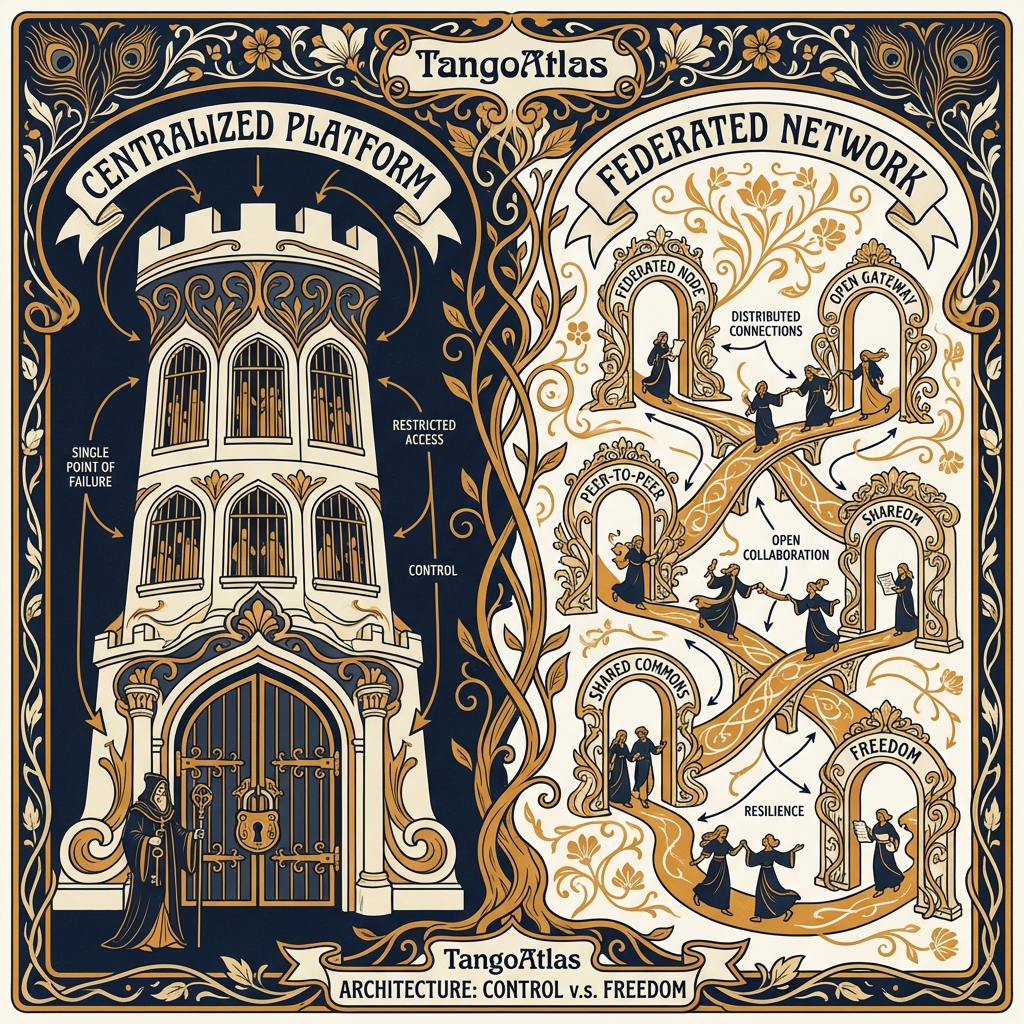
Here’s the thing that trips everyone up about the fediverse: we’ve been trained by 15 years of Facebook and Instagram to think that a social network is one website, run by one company, where everyone creates one account.
The fediverse isn’t that. It’s more like email, or the phone system, or the web itself. A collection of independent services that speak the same language.
Let me make it concrete.
Carlos runs a milonga in Cologne. He creates a page on a community platform — let’s call it charlemos.club. His page address is @cologne-milonga@charlemos.club. Kind of looks like an email address, right? That’s on purpose.
Maria in Hamburg uses Mastodon. She’s been on it for a year, follows tech people and artists. She searches for @cologne-milonga@charlemos.club from her own app and hits “follow.” Done. Carlos’s next event announcement appears in her home feed.
No algorithms decided Maria should see it. No one paid for a boost. Carlos didn’t need to convince Maria to create an account on his platform. She followed from where she already was.
That’s federation. That’s the fediverse.
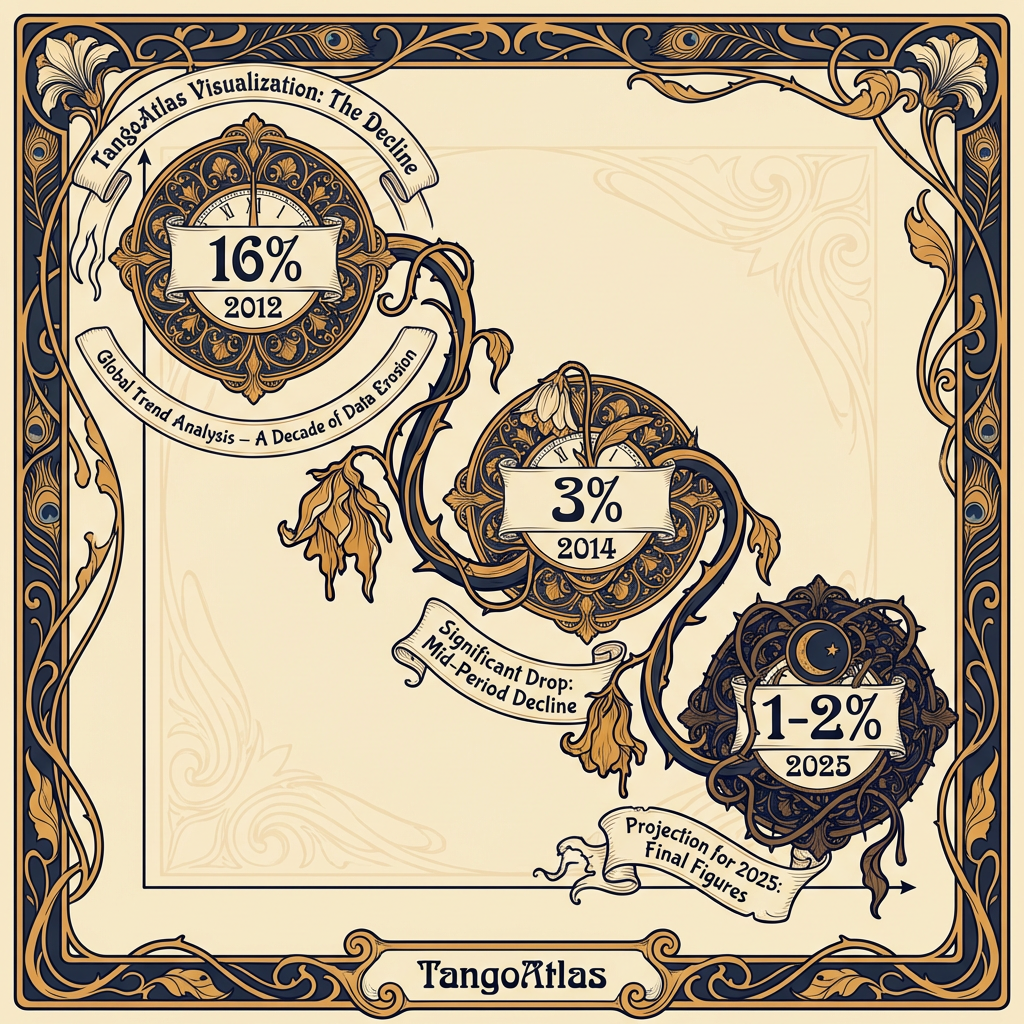
(A quick footnote on why the “no algorithm” part matters: in 2012, the average Facebook Page post reached about 16% of its followers. A study by EdgeRank Checker found that by March 2014, that had already dropped below 3%. By 2025 it’s down to 1–2%, according to Hootsuite. If you run a milonga with 500 followers on Facebook, your typical event post is seen by roughly 5 to 10 of them. I used to think this was a bug. It’s actually a feature — for Facebook.)
But How Does It Actually Work?
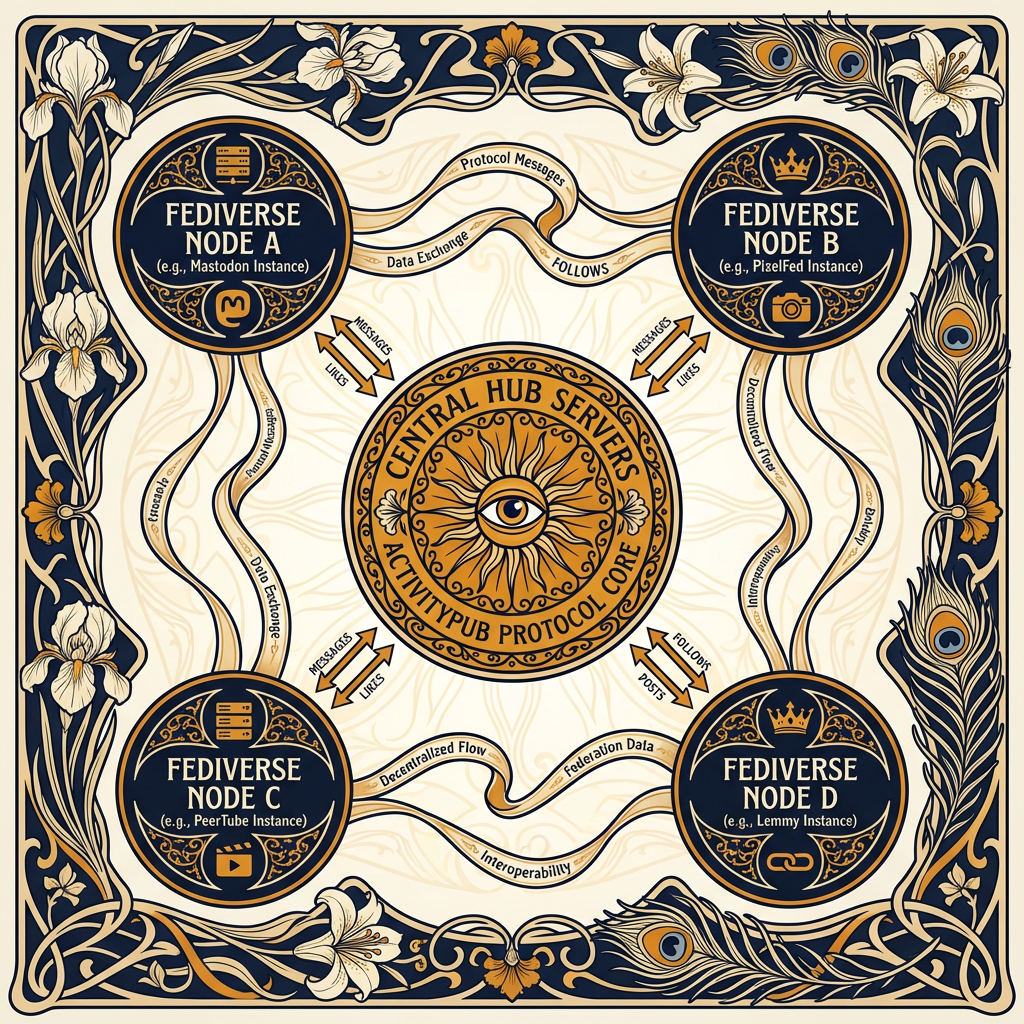
There’s a protocol called ActivityPub. It became a W3C Recommendation on January 23, 2018 — the same organization that standardizes HTML and CSS, the languages the web is built on. ActivityPub is the shared language that lets different platforms talk to each other.
When Carlos posts an event on charlemos.club, the server packages that post into an ActivityPub message and sends it to every server that has someone following Carlos. Maria’s Mastodon server receives it and puts it in her timeline. Kenji’s Mastodon instance in Tokyo receives it too — because he follows the !cologne@charlemos.club city group.
Different apps. Different servers. Different continents. Same post. Instantly.
The key insight: nobody controls the whole network. There’s no company that can change an algorithm and suddenly make your events invisible. There’s no ad system inserted between you and the people who want to hear from you.
“But Nobody I Know Is on the Fediverse”
I hear this constantly. And it misses the point.
The fediverse already has millions of users. According to Mastodon’s own 2024 Annual Report, the Mastodon network had 9.1 million registered accounts and roughly 938,000 monthly active users across 8,851 servers at the end of 2024. That’s just Mastodon. Add in Pixelfed (photos), PeerTube (video), Friendica (groups and events), and the other ActivityPub platforms, and tracking services like FediDB counted more than 26,000 connected servers total by early 2024.
But the more important number is this: WordPress runs 42.4% of all websites on the internet (W3Techs, March 2026). In 2023, Automattic — the company behind WordPress.com — acquired the ActivityPub plugin and hired its developer to build it out full-time. That means a huge chunk of the web can already speak fediverse — the owner just needs to flip the switch.
A tango teacher in Buenos Aires did exactly that. Installed the plugin on her WordPress site — took about two minutes — and now every blog post she publishes is automatically visible on the fediverse. No new account. No migration. One plugin, and her existing website speaks the same language as Mastodon, Friendica, Pixelfed, and every other fediverse app. (I’ll walk through exactly how this works in a later post.)
Or closer to home: Rhein-Neckar Tango, a regional tango community in Germany, has the same setup. One plugin, and every article is automatically syndicated to the fediverse. You can follow @news@www.rhein-neckar-tango.de from Mastodon right now — no new account, no special app. A real tango site, already publishing to the open web.
And then there’s this: in March 2024, Meta began federating Threads — their Twitter competitor with 150 million monthly active users — with ActivityPub. (Engineering at Meta) By June it was available in over 100 countries. (The Verge) Even Facebook’s parent company implemented the open standard. That’s not an endorsement of Meta’s motives — they have plenty of other reasons to participate — but it is a signal that ActivityPub has won the protocol argument. Ghost (a Substack rival) confirmed it would join the fediverse in 2024. Flipboard has already joined.
The network is growing because the standard works. It’s not about convincing everyone to join one new platform. It’s about connecting the platforms that already exist.
What This Means for Tango
Our communities have always been decentralized. There’s no “Facebook of tango” — there are thousands of local organizers, teachers, DJs, and communities, each doing their own thing in their own city. The fediverse matches that reality.
A Hamburg organizer posts an event on their community page. A dancer in Tokyo follows from Mastodon. A teacher in Buenos Aires follows from her WordPress blog. A DJ in Berlin follows from Friendica. The event reaches everyone who cares, on whatever app they prefer. No algorithm decided who sees it.
Is it perfect? No. The apps could be smoother. The onboarding isn’t as slick as signing up for Instagram. Discovery is harder when there’s no central feed — which is why we also need directories. Places where you can find the schools, the milongas, the teachers, when you’re new to a city or planning a trip. More on that in a moment.
But the underlying infrastructure works. And unlike Facebook, it works for us — not for advertisers.

Where I’m Going With This
I’ve been noodling on this for over a decade now — since (2015-ish) I started that Facebook group called “An Alternative to Facebook for the Tango Community.” Most of the people who joined thought I was maybe a bit eccentric. Some still do.
But the technology has caught up with the vision. ActivityPub is a real standard. WordPress supports it natively. Mastodon has critical mass. And the question has shifted from “is there an alternative?” to “what does the alternative actually look like?”
That’s what this series is about. In the next posts, I’ll dig into what it means that we don’t own our communities on Facebook, how the boring infrastructure actually works, what happens when platforms die, and what a tango community built on open standards could look like.
The fediverse isn’t a new Facebook. It’s a new way of connecting that doesn’t require us to hand over control of our communities to a corporation.
And honestly? It’s just email. But for everything else.
This is a personal exploration post. A more detailed version of these ideas, aimed at tango organizers specifically, is coming to tangoatlas.org/blog soon.
Sources
- W3C. “ActivityPub.” W3C Recommendation, 23 January 2018. https://www.w3.org/TR/activitypub/
- Mastodon gGmbH. “Mastodon Annual Report 2024.” February 2025. https://joinmastodon.org/reports/Mastodon Annual Report 2024.pdf
- W3Techs. “Usage statistics and market share of WordPress.” March 2026. https://w3techs.com/technologies/details/cm-wordpress
- TechCrunch. “WordPress.com owner Automattic acquires an ActivityPub plugin so blogs can join the fediverse.” March 13, 2023. https://techcrunch.com/2023/03/13/wordpress-com-owner-automattic-acquires-an-activitypub-plugin-so-blogs-can-join-the-fediverse/
- Engineering at Meta. “Threads has entered the fediverse.” March 21, 2024. https://engineering.fb.com/2024/03/21/networking-traffic/threads-has-entered-the-fediverse/
- TechCrunch. “Mark Zuckerberg says Threads has 150 million monthly active users.” April 24, 2024. https://techcrunch.com/2024/04/24/mark-zuckerberg-says-threads-has-150-million-monthly-active-users/
- The Verge. “Meta is connecting Threads more deeply with the fediverse.” June 25, 2024. https://www.theverge.com/2024/6/25/24185226/meta-threads-fediverse-likes-replies
- TechCrunch. “Substack rival Ghost confirms it will join the fediverse in 2024.” April 22, 2024. https://techcrunch.com/2024/04/22/substack-rival-ghost-confirms-it-will-join-the-fediverse-in-2024/
- Hootsuite. “Is Organic Reach Declining?” 2025. https://blog.hootsuite.com/organic-reach-declining/
- EdgeRank Checker / Adweek. “Facebook organic reach dropped from 16% (Feb 2012) to under 3% (Mar 2014).” https://www.adweek.com/performance-marketing/kristoffer-nelson-srax-guest-post-facebook-news-feed-algorithm/